


In the vast and ever-evolving lexicon of the English language, words are born, words die, and some words fade into obscurity, waiting to be rediscovered. They linger in the footnotes of history, in the dusty pages of forgotten dictionaries, carrying with them a specific, nuanced meaning that our modern vocabulary often struggles to encapsulate. One such word is stormuring—a poetic, almost onomatopoeic term that describes a phenomenon everyone has experienced but few have had a name for. To understand stormuring is to give voice to a universal human experience, to find the melody in the chaos of conversation.
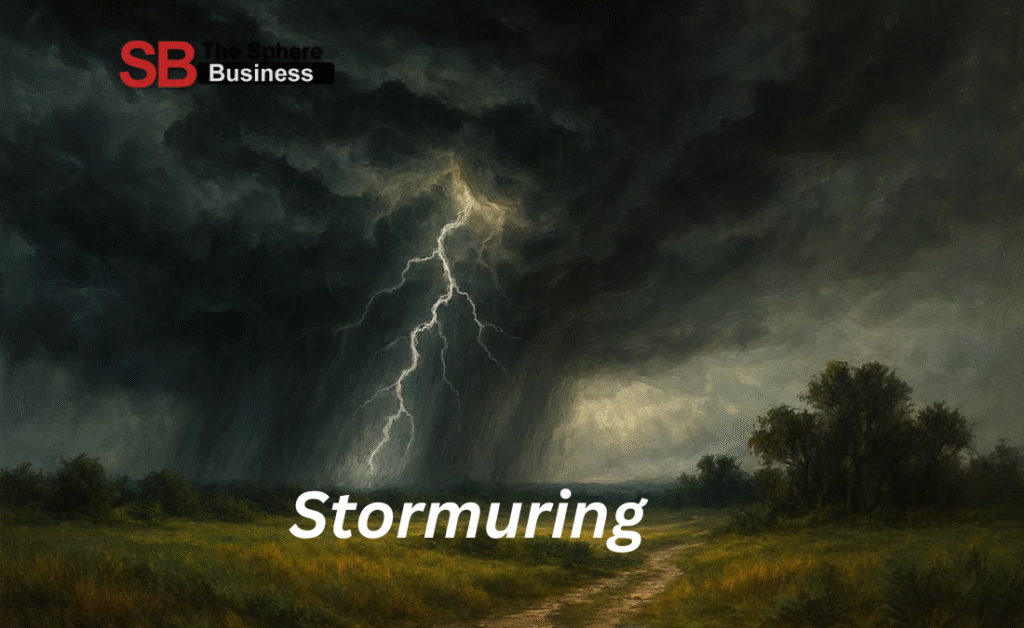
Stormuring is not a modern invention. Its roots dig deep into Middle English, a linguistic period spanning from the 11th to the late 15th century. It is a compound word, beautifully constructed from two ancient elements: “storm,” derived from the Old English storm, meaning a violent disturbance of the atmosphere, and “mure,” an obsolete word stemming from the Middle English muren, which itself comes from the Old French murer, meaning “to wall in” or “to immure.” Literally, it translates to “storm-walling,” but its true meaning is far more evocative. Historically, stormuring was defined as the act of talking or murmuring during a storm. It paints a picture of huddled figures in a dimly lit room, the wind howling and rain lashing against the shutters, finding comfort in low, intimate conversation that acts as a verbal wall against the fury of the elements outside.
The Modern Resonance of Stormuring: Beyond the Literal Storm
While the literal definition of stormuring is enchanting, its true power lies in its metaphorical potential. The “storm” in our contemporary lives is rarely a purely meteorological event. Our storms are emotional, psychological, and digital. They are the gale-force winds of a high-pressure work deadline, the thunderous anxiety of bad news, the hailstorm of social media notifications, and the torrential downpour of daily stressors. In this context, stormuring evolves. It becomes the act of creating a pocket of calm, intimate dialogue amidst any form of chaos. It is the quiet phone call with a friend after a difficult day, the shared jokes between colleagues under the pressure of a project, the soft reassurances whispered in the sterile, frightening environment of a hospital waiting room. Stormuring is the verbal equivalent of building a fort out of blankets and pillows; it’s a deliberate, shared act of constructing a temporary shelter out of words and human connection.
This act of conversational shelter-building is a profound psychological balm. The human brain is hardwired to perceive chaos and uncertainty as threats. A storm, whether real or metaphorical, triggers our fight-or-flight response, elevating stress hormones like cortisol. Stormuring serves as a powerful countermeasure. By engaging in low, focused, and intimate conversation, we accomplish several things. First, we signal safety to our own nervous system and to the person we are with. The tone of a murmur is inherently non-threatening and calming. Second, it forces a form of cognitive reframing. Instead of focusing solely on the external storm, we redirect our attention to the shared internal experience of dialogue and connection. This act of mutual vulnerability and support builds resilience. We are no longer isolated individuals facing a tempest alone; we are a crew, stormuring together in the galley of the ship, riding out the waves as one.
The Digital Storm and the Erosion of Stormuring
Paradoxically, in an age of hyper-connectivity, the art of stormuring is in danger of being lost. Our modern storms are often endless and pervasive, bleeding into every moment of our lives through the screens in our pockets. The constant pings, alerts, and news cycles create a perpetual low-grade psychic storm, and yet, our response is rarely to stormure. Instead, we often retreat into isolated scrolling, absorbing the chaos without the mediating, calming influence of shared, intimate conversation. We are all experiencing the same digital hurricane, but we are each alone in our own lifeboats, shouting into the void rather than murmuring to the person next to us.
Social media, for all its promise of connection, often facilitates performance rather than intimacy. It encourages broadcasting to a crowd, not murmuring to a confidant. The conversations are public, manicured, and prone to the very thunderclaps of outrage and conflict that characterize a storm. True stormuring requires privacy, vulnerability, and a lack of performative agenda. It is the antithesis of a viral tweet or a public comment thread. The digital age has given us incredible tools for communication, but it has perhaps unintentionally dismantled the quiet spaces where stormuring naturally occurs.
How to Cultivate the Art of Stormuring in Your Life
Recognizing the value of this forgotten word is the first step. The next is to intentionally cultivate the practice of stormuring in our daily lives. It is a conscious decision to build walls of words against the storms we all face.
- Create Sacred Spaces: Designate times and places for technology-free conversation. This could be a rule during a meal, the first twenty minutes after getting home from work, or a weekly walk with a friend. The key is to remove the digital distractions that prevent deep, uninterrupted dialogue.
- Embrace the Murmur: Pay attention to tone. Stormuring isn’t about debating or solving the world’s problems at high volume. It’s about a softer, more meandering exchange. It’s the comfort of a familiar voice discussing simple, heartfelt things amidst complexity.
- Be a Shelter for Others: The act of stormuring is a two-way street. When someone you care about is in the midst of a storm, don’t always feel compelled to offer solutions or “fix” it. Often, the most powerful thing you can do is simply be present. Listen. Offer a quiet, empathetic presence. Murmur back. Become part of their wall against the wind.
- Find the Storm in the Calm: You need not wait for a crisis. Stormuring can be a proactive practice. In the calm moments, strengthen your connections through gentle, meaningful conversation. Build your shelters in advance, so they are strong when the weather turns.
Conclusion
Stormuring is far more than a historical curiosity. It is a vital, timeless concept that names a deeply human behavior. It is the instinct to huddle together and use the soft power of our voices to create sanctuary from chaos. In resurrecting this word, we give ourselves permission to seek and offer this profound form of comfort. We are reminded that connection is our oldest and most reliable defense against the storms of life. So the next time you feel the pressure drop and the winds of worry begin to howl, don’t just endure it in silence. Reach out. Lower your voice. Lean in. And stormure.