
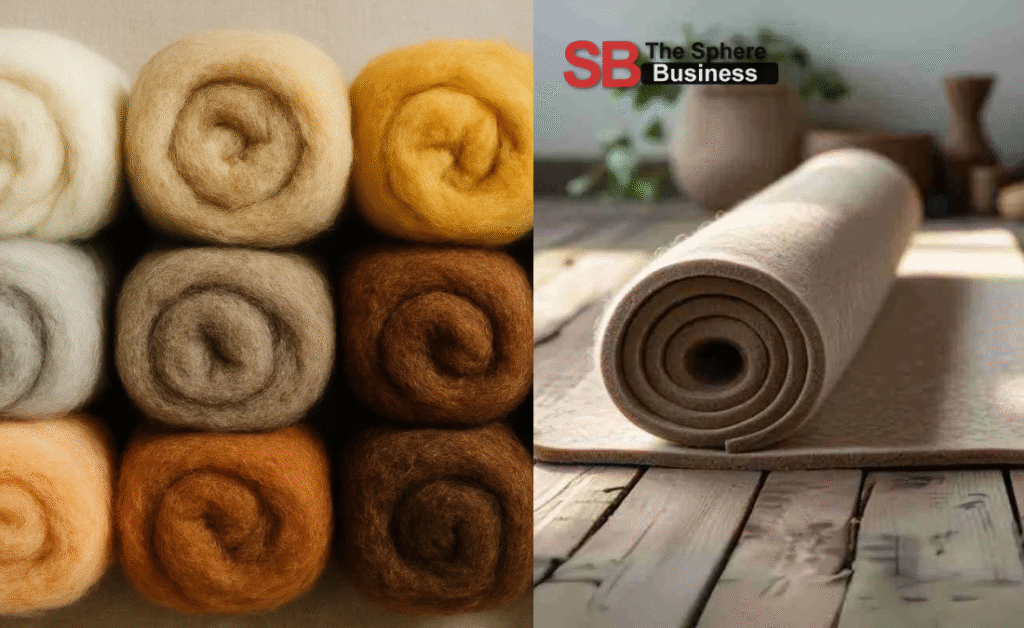

In the ever-evolving world of interior design, sustainable living, and home comfort, there is a growing appreciation for returning to natural, time-tested materials. Among these, one stands out for its remarkable simplicity, efficiency, and eco-friendly credentials: the Wollmatte. More than just a wool rug or a simple underlay, a Wollmatte (plural: Wollmatten) is a dense, felted mat made from sheep’s wool, engineered to provide exceptional thermal insulation, moisture regulation, and acoustic damping. This humble yet powerful product is revolutionizing how we think about creating warm, healthy, and comfortable living spaces, from the floors under our feet to the walls around us.
What Exactly Are Wollmatten?
To understand the value of Wollmatten, we must first define them. Translated directly from German, “Wollmatten” means “wool mats.” However, this translation barely scratches the surface. These are not loosely woven carpets but rather non-woven, needle-felted mats made from compressed wool fibers. The process involves taking raw or recycled sheep’s wool, cleaning it thoroughly, and then using barbed needles to interlock the fibers into a dense, stable, and uniform felt mat.
This felting process is what gives Wollmatten their unique properties. The result is a resilient, flexible, and highly functional material that comes in various thicknesses and densities, typically ranging from one to several centimeters thick. Their primary function is not decorative but performative, serving as a natural insulation solution for floors, walls, ceilings, and even as an underlay for flooring materials like laminate, hardwood, and tile.
The Science Behind the Comfort: Why Wool is a Wonder Material
The efficacy of Wollmatten is rooted in the innate biological properties of sheep’s wool, a true marvel of natural engineering.
- Superior Thermal Insulation: Wool fibers are crimped, creating millions of tiny air pockets within the mat. Air is a poor conductor of heat, so these trapped pockets create an exceptional thermal barrier. This keeps warmth inside during the winter and heat out during the summer, regulating indoor temperatures and reducing energy costs for heating and cooling.
- Exceptional Moisture Regulation: This is perhaps wool’s most extraordinary feature. Wool fibers are hygroscopic, meaning they can absorb, hold, and release water vapor from the surrounding air without feeling wet. A Wollmatte can absorb up to 30% of its own weight in moisture before feeling damp. This ability buffers indoor humidity levels, preventing condensation that can lead to mold growth—a significant advantage over synthetic insulations like Styrofoam.
- Natural Air Purification: Wool actively absorbs and neutralizes common indoor air pollutants such as formaldehyde, nitrogen dioxide, and sulfur dioxide from the atmosphere, effectively improving indoor air quality.
- Acoustic Damping: The dense, fibrous structure of a Wollmatte is excellent at absorbing sound waves. Used as underlayment for flooring, it drastically reduces impact noise (footsteps, dropped objects) and airborne noise, creating a quieter, more peaceful environment—a key benefit in multi-story buildings.
- Durability and Resilience: Wool fibers are naturally elastic and can be compressed thousands of times without losing their loft or insulating ability. A high-quality Wollmatte will maintain its performance and structure for decades.
Applications: Where to Use Wollmatten in Your Home
The versatility of Wollmatten makes them suitable for a wide array of applications throughout the home.
- Floor Insulation: This is the most common use. Placing Wollmatten under a final floor covering (like hardwood, laminate, or engineered wood) creates a warm-to-the-touch floor, reduces heat loss through the foundation, and provides a soft, comfortable underfoot feel. It is particularly beloved in children’s rooms and living areas.
- Wall and Ceiling Insulation: For those pursuing natural building techniques like timber framing or renovating old homes, Wollmatten can be fitted between studs or rafters. They provide excellent thermal and acoustic insulation for walls and ceilings, contributing to a stable and healthy indoor climate.
- Underlay for Laminate and Hardwood: They are a premium alternative to foam or cork underlayment. A Wollmatte not only insulates and dampens sound but also provides a slight cushioning effect that protects the floor from wear and adds to its longevity.
- Moisture Buffer in Damp Spaces: While not a direct waterproofing solution, their moisture-regulating ability makes them useful in spaces like attics, crawl spaces, and basements to control ambient humidity and prevent musty odors.
The Sustainable Choice: Wollmatten and the Environment
In an age of climate consciousness, the environmental argument for Wollmatten is compelling.
- Renewable and Biodegradable: Wool is a completely renewable resource—sheep grow a new fleece every year. At the end of its very long life, a Wollmatte is fully biodegradable, returning to the earth without leaving behind microplastics or toxic waste.
- Low Embodied Energy: The production process of wool felt requires significantly less energy compared to the manufacturing of synthetic insulations like fiberglass or polystyrene, which are derived from fossil fuels.
- Carbon Sequestration: Wool is approximately 50% carbon by weight, stored in a stable form. By using wool products, we are effectively storing carbon that was absorbed by the grazing pastures.
- Recyclable and Recycled: Many Wollmatten are made from post-industrial recycled wool, giving a valuable material a second life and further reducing the product’s environmental footprint.
Wollmatten vs. Synthetic Insulation: A Clear Comparison
When stacked against common synthetic alternatives like expanded polystyrene (EPS/XPS) or mineral wool, Wollmatten offer distinct advantages:
- Health & Safety: Wool is naturally non-irritating to skin and lungs (unlike fiberglass) and is safe to handle without extensive protective gear. It is naturally flame-retardant and will not melt or emit toxic fumes in a fire.
- Moisture Handling: Synthetics can trap moisture, leading to mold growth within wall cavities. Wool manages moisture actively, keeping the building structure drier and healthier.
- Comfort: The installation process is pleasant and non-toxic, and the resulting living environment has superior air quality and acoustic comfort.
The primary trade-off is that Wollmatten can have a higher upfront cost than basic synthetic options, though this is often offset by energy savings, durability, and health benefits over time.
Conclusion: Embracing Natural Comfort with Wollmatten
The Wollmatte is far more than a simple mat of wool; it is a testament to the power of using intelligent, natural solutions in our modern lives. It successfully bridges the gap between traditional wisdom and contemporary needs for energy efficiency, healthy living, and sustainable design. By choosing to incorporate Wollmatten into a home, one is not just selecting an insulation material; they are investing in a regulator of temperature, a guardian of air quality, a silencer of noise, and a protector of the planet. In the quest for a warmer, quieter, and healthier home, the answer has been provided by nature itself, neatly packaged in the form of a durable, felted Wollmatte.