
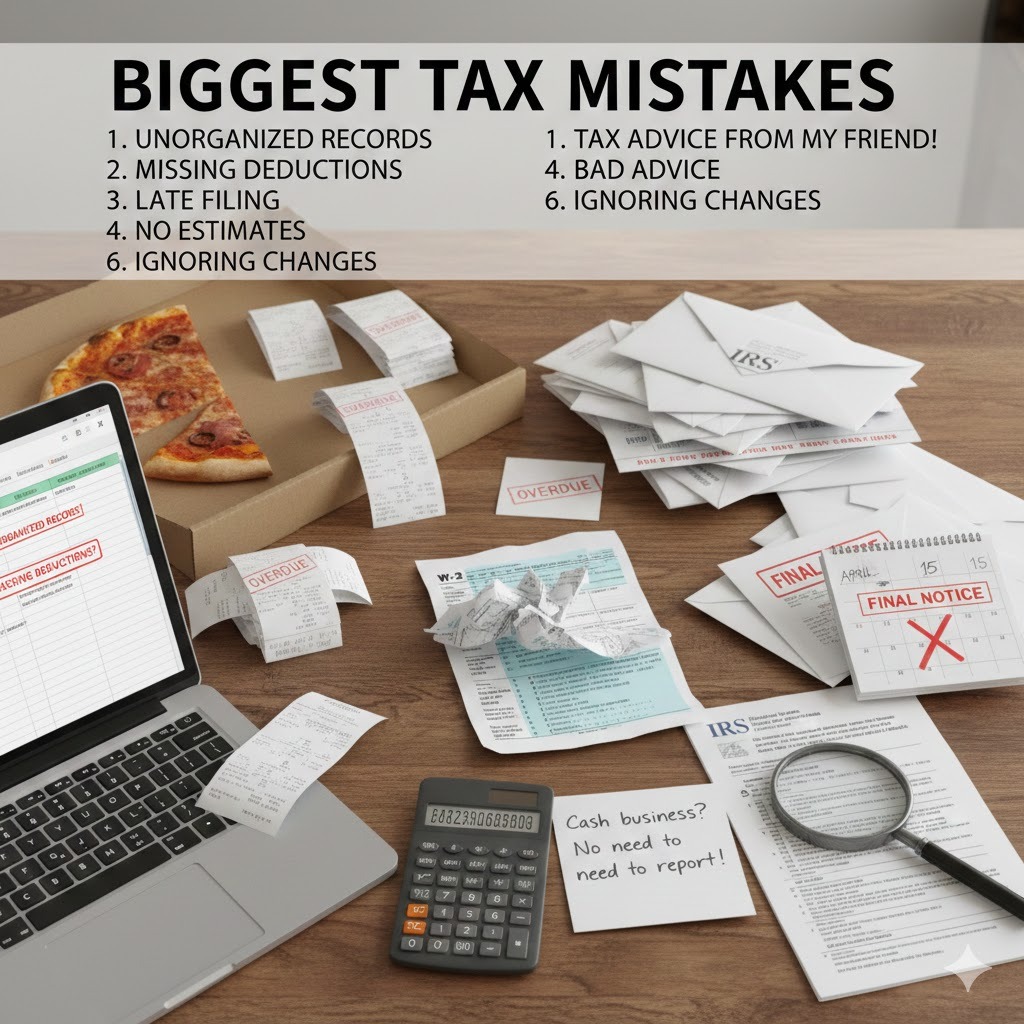

What are the biggest tax mistakes people make is an important question because most people do not get in trouble with taxes due to fraud, but because of small mistakes repeated over time.
Taxes confuse many individuals and business owners. Rules change, deadlines are strict, and the consequences of errors can be expensive. According to guidance from the Internal Revenue Service and the U.S. Small Business Administration, the most common tax problems come from poor planning, missing documentation, and misunderstanding basic obligations.
Business service platforms such as BusinessRocket also note that tax mistakes are one of the top reasons new businesses struggle in their first two years. That’s why you have to hire some expert to avoid these types of mistakes when you are ready to start your llc .
Below are the biggest tax mistakes people make, explained clearly so they can be avoided.
Not understanding their tax obligations
Many people assume taxes are handled automatically, especially first-time business owners or freelancers. In reality, the government expects you to know your obligations even if no one reminds you.
Common misunderstandings include:
- Thinking taxes are only due once per year
- Assuming small income does not need to be reported
- Believing online platforms handle all tax reporting
Failing to understand your tax responsibilities often leads to penalties, interest, and stress that could have been avoided with basic education.
Missing tax deadlines
Missing deadlines is one of the most expensive tax mistakes. Even if you owe little or no tax, filing late can trigger penalties.
Typical missed deadlines include:
- Estimated quarterly tax payments
- Annual income tax returns
- Payroll tax filings
- Sales tax submissions
The IRS charges penalties based on time and unpaid amounts, and interest continues to grow until the balance is settled.
Mixing personal and business finances
This is a major mistake for LLC owners and self-employed individuals. Using one bank account for both personal and business transactions makes it difficult to track income and expenses accurately.
Problems caused by mixing finances include:
- Incorrect deductions
- Poor bookkeeping
- Increased audit risk
- Loss of liability protection for LLC owners
The SBA consistently advises business owners to keep finances separate to maintain legal and tax clarity.
Claiming deductions without proper documentation
Many people take deductions they believe they are entitled to but cannot prove. The IRS requires documentation for deductions, not assumptions.
Common unsupported deductions include:
- Home office expenses without meeting requirements
- Vehicle expenses without mileage logs
- Meals and travel without receipts
- Personal expenses labeled as business costs
Without proper records, deductions can be denied during an audit, resulting in back taxes and penalties.
Forgetting about estimated quarterly taxes
Self-employed individuals, freelancers, and LLC owners often forget that taxes are not automatically withheld from their income. Estimated taxes must usually be paid four times a year.
This mistake leads to:
- Large unexpected tax bills
- Underpayment penalties
- Cash flow problems
The IRS expects taxes to be paid as income is earned, not just at year-end.
Choosing the wrong tax classification for an LLC
Many LLC owners never evaluate whether their default tax status is right for them. While default taxation works for some, others overpay because they never explored alternatives.
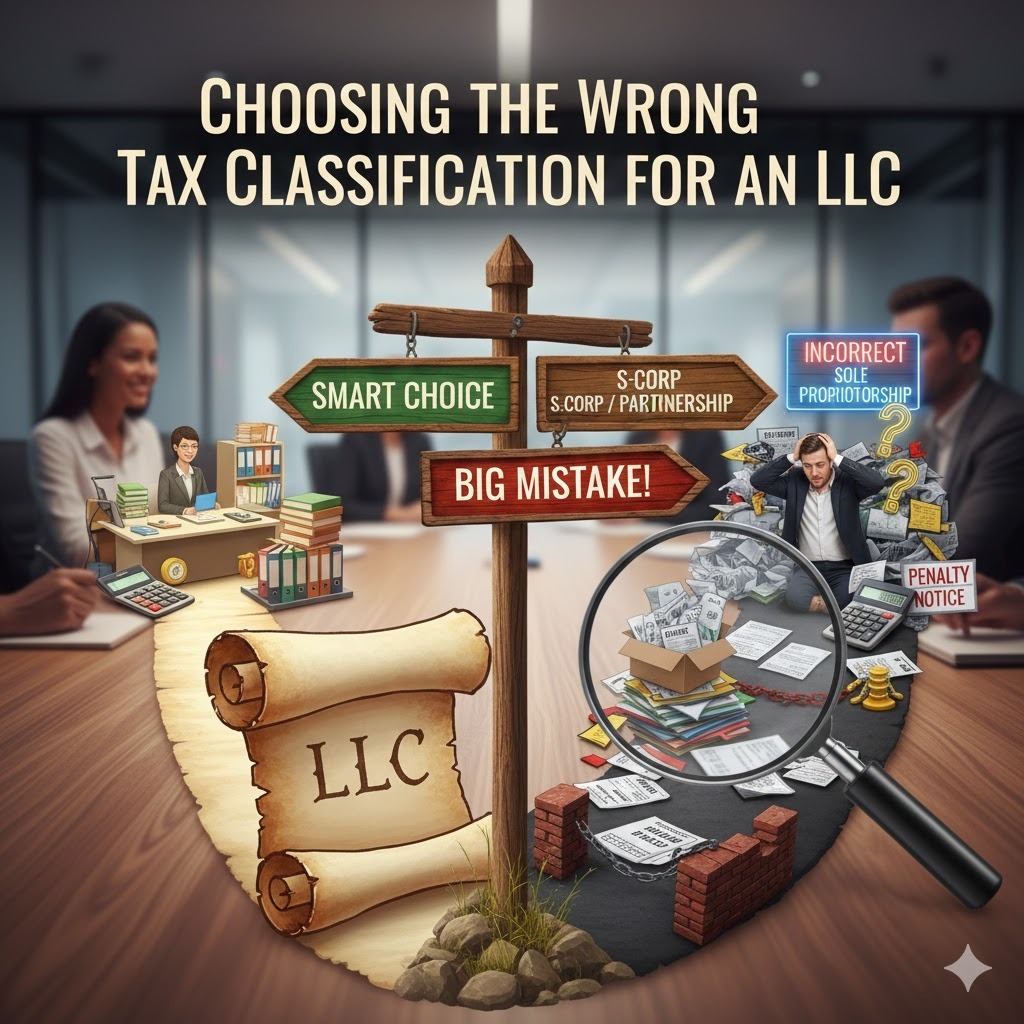
Tax classification affects:
- Self-employment tax
- Payroll structure
- Reporting complexity
- Overall tax liability
Choosing the wrong structure can cost thousands of dollars annually.
Ignoring state and local taxes
People often focus only on federal taxes and forget about state and local obligations. These can include income tax, sales tax, franchise tax, and local business fees.
Common mistakes include:
- Not registering for sales tax
- Failing to file state annual reports
- Ignoring city or county business taxes
State agencies can be just as aggressive as the IRS when it comes to enforcement.
Poor record keeping throughout the year
Trying to reconstruct income and expenses at tax time is a recipe for errors. Missing records lead to inaccurate filings and lost deductions.
Poor record keeping causes:
- Underreported income
- Missed deductions
- Increased audit risk
- Stress during tax season
Maintaining records consistently throughout the year makes tax filing easier and more accurate.
Not getting professional tax advice when needed
Many people avoid professional help to save money, but this often costs more in the long run. Tax professionals help with planning, compliance, and risk reduction.
Situations where professional advice is critical include:
- Starting a business
- Growing income significantly
- Hiring employees
- Operating in multiple states
The SBA and IRS both encourage consulting qualified professionals when tax situations become complex.
Assuming mistakes will not be noticed
Some people believe small errors will go unnoticed. Modern tax systems rely heavily on automated matching, data sharing, and reporting from third parties.
This assumption leads to:
- Notices for unreported income
- Back taxes and penalties
- Long-term compliance issues
Even honest mistakes can trigger audits if inconsistencies appear in reported data.
Table: Biggest tax mistakes and their consequences
| Tax mistake | Common result | Long-term impact |
| Missing deadlines | Penalties and interest | Ongoing tax debt |
| Mixing finances | Disallowed deductions | Audit risk |
| No estimated taxes | Large tax bills | Cash flow issues |
| Poor documentation | Lost deductions | Back taxes |
| Wrong LLC tax setup | Overpaid taxes | Reduced profits |
How to avoid these tax mistakes
Avoiding tax mistakes does not require advanced knowledge. It requires consistency, awareness, and planning.
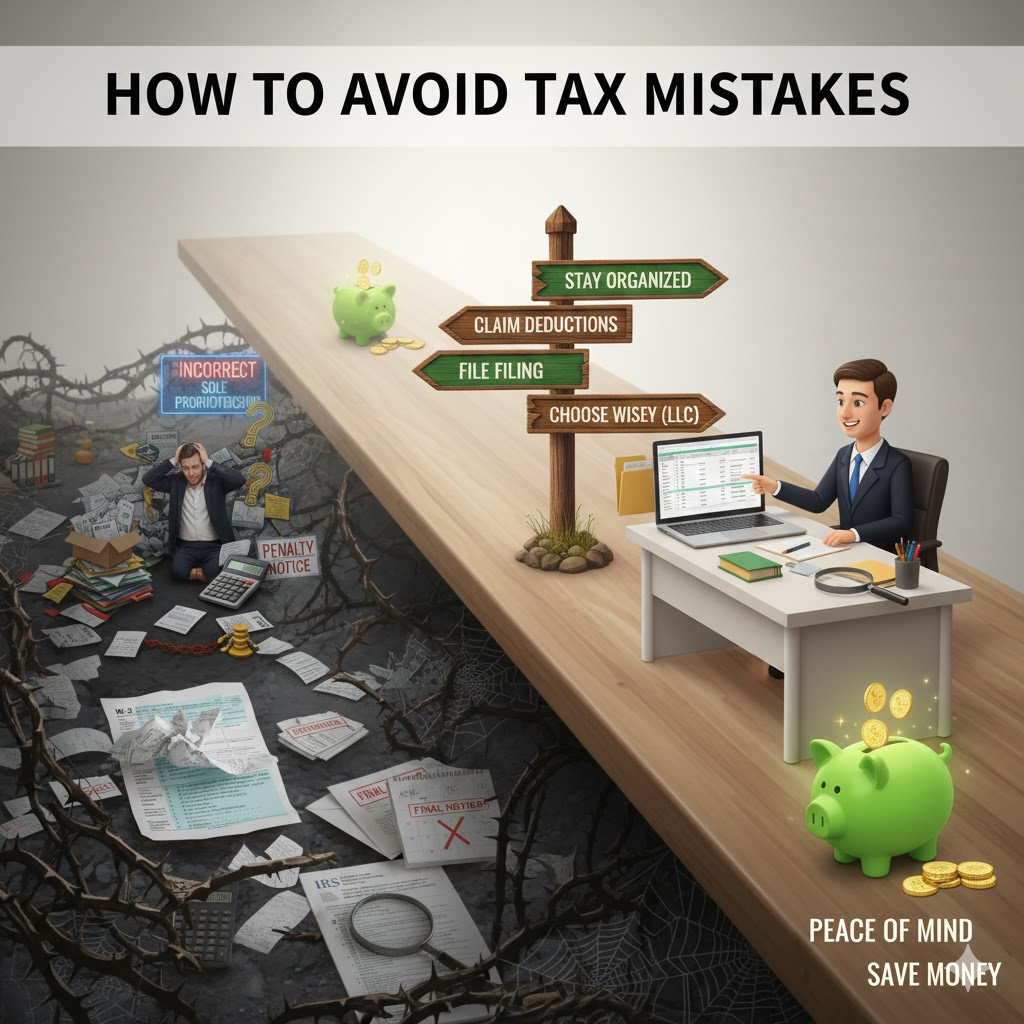
Simple habits that help include:
- Tracking income and expenses monthly
- Paying estimated taxes on time
- Keeping receipts and records
- Reviewing tax structure annually
- Seeking professional guidance when needed
Platforms like BusinessRocket help business owners understand formation, compliance, and tax basics, while the IRS and SBA provide official guidance and educational resources.
Final thoughts
The biggest tax mistakes people make are rarely intentional. They usually happen because of confusion, delay, or poor planning. Once penalties and interest start, fixing the problem becomes harder and more expensive.
Understanding your obligations, staying organized, and getting help when necessary can prevent most tax problems before they start. Taxes do not have to be scary, but they do require respect, attention, and consistency.
Keep an eye for more latest news & updates on SB TheSphereBusiness!