
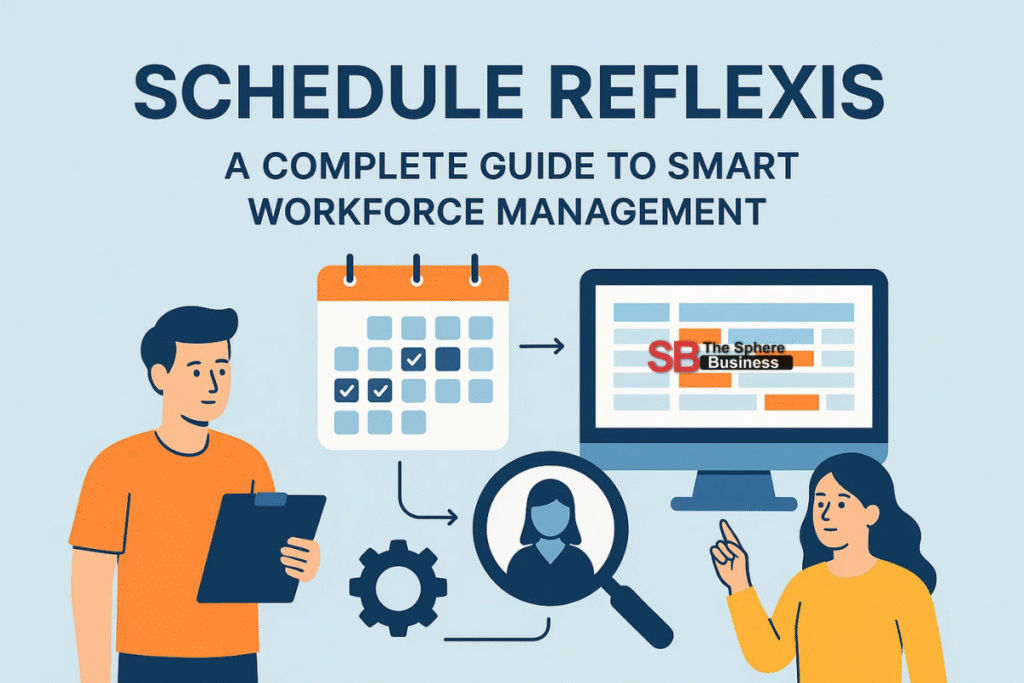

In today’s fast-paced retail and service environments, effective workforce management is essential to maintain productivity, ensure employee satisfaction, and meet customer expectations. One of the most advanced tools designed to help organizations achieve these goals is Schedule Reflexis. This intelligent scheduling solution has transformed how businesses manage shifts, track labor costs, and enhance operational efficiency.
This article explores Schedule Reflexis in detail — from its features and benefits to its implementation and impact on businesses.
What is Schedule Reflexis?
Schedule Reflexis is a cloud-based workforce management platform developed by Reflexis Systems (now part of Zebra Technologies). It focuses on providing intelligent scheduling solutions that align labor resources with business needs.
The platform uses AI-driven analytics and automation to help organizations create accurate, efficient, and compliant employee schedules. It’s widely used across industries like retail, hospitality, banking, and healthcare to streamline workforce operations and improve employee engagement.
The Purpose of Schedule Reflexis
The main goal of Schedule Reflexis is to simplify and optimize workforce scheduling. Instead of relying on manual spreadsheets or outdated systems, Reflexis provides a centralized, intelligent solution that balances employee preferences with business demands.
Some of the primary purposes include:
- Reducing scheduling errors through automation and forecasting
- Enhancing labor productivity by matching the right staff to the right tasks
- Ensuring compliance with labor laws and company policies
- Boosting employee satisfaction through better schedule transparency and flexibility
Key Features of Schedule Reflexis
1. AI-Powered Scheduling
Schedule Reflexis uses artificial intelligence to analyze historical data, forecast labor needs, and automatically create optimized schedules. This reduces overstaffing or understaffing issues while ensuring operational efficiency.
2. Employee Self-Service Portal
Employees can easily view, swap, or request shifts through a mobile-friendly interface. This self-service capability enhances transparency and gives employees more control over their work-life balance.
3. Real-Time Labor Forecasting
By integrating sales data and operational trends, Reflexis provides real-time labor forecasts. This ensures that the right number of employees are scheduled during peak and off-peak hours.
4. Compliance Management
The platform ensures compliance with federal, state, and organizational labor laws. It alerts managers if any scheduling action may violate rules regarding overtime, breaks, or shift durations.
5. Mobile Accessibility
With the Reflexis mobile app, managers and employees can access schedules, make changes, and communicate in real-time — anywhere and anytime.
6. Task and Time Management
In addition to scheduling, Schedule Reflexis integrates task management and time tracking, ensuring that employees remain focused and accountable during their shifts.
How Schedule Reflexis Works
Schedule Reflexis operates through a combination of automation, analytics, and machine learning. Here’s a simplified breakdown of its workflow:
- Data Collection:
The system gathers data from POS systems, attendance records, and past schedules. - Forecasting:
Reflexis uses predictive analytics to estimate future labor demands based on factors like sales trends, seasonality, and customer traffic. - Schedule Generation:
The platform automatically generates optimal schedules that balance business needs with employee availability and preferences. - Manager Review:
Managers can review, adjust, and approve schedules through an intuitive dashboard. - Employee Communication:
Employees receive notifications about new schedules, shift changes, or open shifts via the Reflexis mobile app.
Benefits of Using Schedule Reflexis
1. Improved Workforce Efficiency
The automation of manual scheduling tasks allows managers to focus on strategic initiatives instead of administrative work.
2. Enhanced Employee Engagement
Through transparent scheduling, shift flexibility, and mobile accessibility, Schedule Reflexis helps create a more engaged and satisfied workforce.
3. Cost Reduction
Optimized scheduling minimizes overtime expenses, reduces unnecessary labor costs, and improves overall profitability.
4. Better Customer Service
With the right employees scheduled at the right time, businesses can deliver a seamless customer experience.
5. Accurate Labor Forecasting
By leveraging historical data and real-time trends, Schedule Reflexis ensures accurate labor forecasting that aligns staffing with business performance.
6. Compliance and Risk Mitigation
The platform’s automated alerts and compliance tools prevent legal risks and ensure adherence to labor laws.
Industries That Benefit from Schedule Reflexis
Retail
Retailers use Schedule Reflexis to handle large, diverse workforces across multiple stores. It helps manage peak seasons, special promotions, and fluctuating customer demand effectively.
Hospitality
Hotels, restaurants, and resorts utilize Reflexis to optimize shift coverage while accommodating employee preferences, improving both guest satisfaction and staff morale.
Healthcare
Hospitals and clinics benefit from Reflexis’ ability to manage complex shift rotations, ensuring that qualified staff are always available.
Banking
Banks and financial institutions use Reflexis for workforce planning, ensuring adequate staffing during busy hours and improving service quality.
Manufacturing
Manufacturing plants leverage Schedule Reflexis for shift management, ensuring compliance with labor regulations and efficient production schedules.
Schedule Reflexis and Employee Experience
Employee satisfaction is a key factor in reducing turnover and increasing productivity. Schedule Reflexis plays an important role in improving employee experience by:
- Allowing employees to view and manage their schedules in real-time
- Providing options for shift swaps or availability updates
- Sending instant notifications for any schedule changes
- Supporting communication between managers and staff
This level of transparency and flexibility fosters a positive work environment, empowering employees to take control of their work-life balance.
Implementation of Schedule Reflexis
Implementing Schedule Reflexis involves several key steps:
- Assessment:
Analyze the organization’s workforce needs, current scheduling methods, and system integration requirements. - Customization:
Configure Reflexis to match the company’s specific policies, workflows, and business goals. - Training:
Conduct training sessions for managers and employees to ensure smooth adoption. - Integration:
Connect Reflexis with existing HR, payroll, and POS systems for seamless data flow. - Monitoring and Support:
Continuously monitor system performance and make adjustments as needed.
Schedule Reflexis vs. Traditional Scheduling Methods
| Feature | Schedule Reflexis | Traditional Scheduling |
|---|---|---|
| Automation | AI-driven and automatic | Manual, time-consuming |
| Accuracy | High due to data analytics | Error-prone |
| Compliance | Built-in labor law checks | Often overlooked |
| Accessibility | Mobile and cloud-based | Limited to desktop |
| Employee Involvement | High through self-service tools | Low employee input |
| Forecasting | Predictive and data-backed | Based on guesswork |
Challenges of Schedule Reflexis
While Schedule Reflexis offers numerous benefits, it also comes with certain challenges:
- Initial setup cost can be high for small businesses.
- Training may be required for managers unfamiliar with digital tools.
- Integration complexity with legacy systems might need technical support.
- Dependence on data accuracy — poor data input can lead to suboptimal results.
However, these challenges are minor compared to the long-term efficiency and productivity gains.
The Future of Schedule Reflexis
The future of Schedule Reflexis looks promising as Zebra Technologies continues to enhance its capabilities with AI, machine learning, and advanced analytics. The platform is evolving to include features like real-time workforce insights, voice-enabled management tools, and predictive analytics that can forecast labor needs weeks in advance.
As hybrid work models and flexible schedules become more common, Reflexis will play a central role in helping organizations adapt to changing workforce trends.
Conclusion
In conclusion, Schedule Reflexis is more than just a scheduling tool — it’s a comprehensive workforce management solution designed to meet the demands of modern businesses. By combining AI-driven automation, real-time forecasting, and mobile accessibility, it empowers organizations to improve efficiency, reduce costs, and enhance employee satisfaction.
For companies seeking to streamline operations, ensure compliance, and foster a more engaged workforce, Schedule Reflexis stands as one of the most effective and future-ready solutions in the market today.