


The name Murray Hone may not be a global household name, but within the specific and respected circles of New Zealand’s aviation history, agricultural aviation, and the tight-knit community of Feilding, it resonates with profound significance. To understand Murray Hone is to delve into a story of post-war innovation, entrepreneurial spirit, and an unwavering commitment to community—a narrative that encapsulates a certain pioneering era of Aotearoa New Zealand. This article explores the life and legacy of a man whose contributions helped shape an industry and support a town.
Who Was Murray Hone? Establishing the Foundation
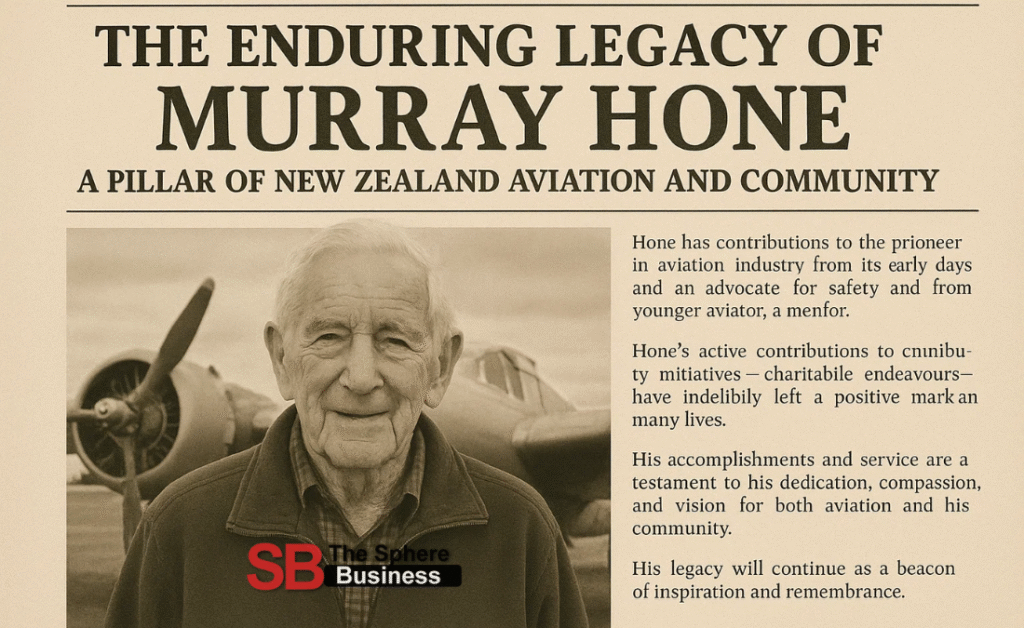
Murray Hone was a New Zealand pilot and entrepreneur, best known as the founder of Fieldair Holdings Limited, a pioneering agricultural aviation company that became a cornerstone of rural industry in the lower North Island. His story is intrinsically linked to the post-World War II period, a time when surplus military aircraft and trained pilots returned home, looking to apply their skills in peacetime. Hone was one of these men. He recognized the potential for aircraft, particularly the rugged and versatile de Havilland Tiger Moth, to revolutionize farming practices.
In 1947, he established Fieldair at the Feilding Aerodrome, initially focusing on topdressing—a process of spreading fertilizer or seed from the air across vast and often inaccessible hill country. This practice was nothing short of revolutionary for New Zealand agriculture. It dramatically increased productivity, allowed farmers to efficiently manage land that was previously uneconomical to treat, and played a key role in the nation’s post-war economic boom. Murray Hone’s vision was at the very forefront of this agricultural transformation.
The Rise of Fieldair: Murray Hone’s Business Acumen
Murray Hone was more than just a skilled pilot; he was a shrewd businessman. He understood that for agricultural aviation to thrive, it needed reliability, safety, and a diverse range of services. Under his leadership, Fieldair Holdings Limited expanded rapidly. The company’s fleet grew to include not only Tiger Moths but also more advanced aircraft like the Fletcher FU-24, a plane specifically designed for topdressing and one that became synonymous with the industry in New Zealand.
Hone’s company diversified its operations beyond topdressing to include:
- Aerial Spraying: Applying pesticides and herbicides to control weeds and pests.
- Spreading Superphosphate: A key fertilizer for New Zealand’s phosphorus-deficient soils.
- Pilot Training: Recognizing the need for specialized skills, Fieldair trained a new generation of pilots in the unique and demanding discipline of low-level agricultural flying.
- General Aviation Services: Including charter flights, aircraft maintenance, and engineering.
Through strategic growth and a reputation for excellence, Murray Hone built Fieldair into one of the most significant and respected aviation companies in the country. His leadership ensured that the Manawatū region, and Feilding in particular, became a national hub for agricultural aviation.
Beyond Business: Murray Hone the Community Man
The legacy of Murray Hone extends far beyond the airstrip and balance sheets. He was deeply embedded in the Feilding community, a town that served as both his home and the operational heart of his business. His contributions to community life were substantial and multifaceted.
He was a prominent member of the Feilding Rotary Club, embodying its ethos of “Service Above Self.” Through Rotary, he was involved in numerous local projects and initiatives aimed at improving the lives of Feilding residents. His business success also made him a major local employer, providing stable jobs and fostering local talent in aviation engineering, logistics, and piloting. The economic activity generated by Fieldair had a significant ripple effect throughout the town, supporting other local businesses and services.
Perhaps one of his most lasting physical legacies is the Feilding Aerodrome itself. Hone was instrumental in its development and ongoing viability. Under his stewardship, it grew from a basic landing strip into a modern, functional facility that served not only his company but also the Royal New Zealand Aero Club, private aviators, and emergency services. He understood that a thriving aerodrome was vital infrastructure for both his business and the region’s connectivity.
The Hone Family: Carrying on a Tradition
The story of Murray Hone is also a story of family. The Hone family remained deeply involved in the operations of Fieldair for decades. His son, David Hone, followed in his father’s footsteps, taking a leading role in the company and ensuring that the standards and vision set by Murray were maintained. This multi-generational involvement added a layer of stability and long-term commitment to the business, reinforcing its reputation as a dependable and trusted family-owned enterprise within the industry.
This continuity ensured that the values instilled by Murray Hone—a focus on safety, innovation, and customer service—remained central to Fieldair’s operations long after its founding. The Hone name became synonymous not just with the company’s past, but with its present and future, creating a powerful brand identity built on trust and heritage.
The Later Years and a Lasting Impact
While the specific details of Murray Hone’s later life and passing are a private matter for his family, his public legacy is clear and enduring. He lived to see the industry he helped create mature into a vital component of New Zealand’s primary sector. The company he founded continued to thrive and adapt to new technologies and market demands.
Even after eventual changes in ownership and structure, the name Fieldair, pioneered by Murray Hone, remains a significant part of New Zealand’s aviation landscape. The practices he helped perfect are still in use today, and the economic foundation he helped build for the Feilding region left a permanent mark.
Conclusion
In conclusion, Murray Hone was far more than an entrepreneur or a pilot; he was a visionary who played a pivotal role in shaping modern New Zealand. His ability to see the potential for aviation in agriculture placed him at the forefront of an industry that would boost the nation’s economy for generations. Through Fieldair Holdings Limited, he built a successful business empire grounded in practicality and innovation. More importantly, as a community man, he invested deeply in Feilding, supporting its growth and prosperity through employment, community service, and the development of essential infrastructure. The story of Murray Hone is a powerful testament to how one individual’s drive, skill, and community spirit can leave an indelible mark on both an industry and a town, ensuring that his name is remembered with respect and admiration.