


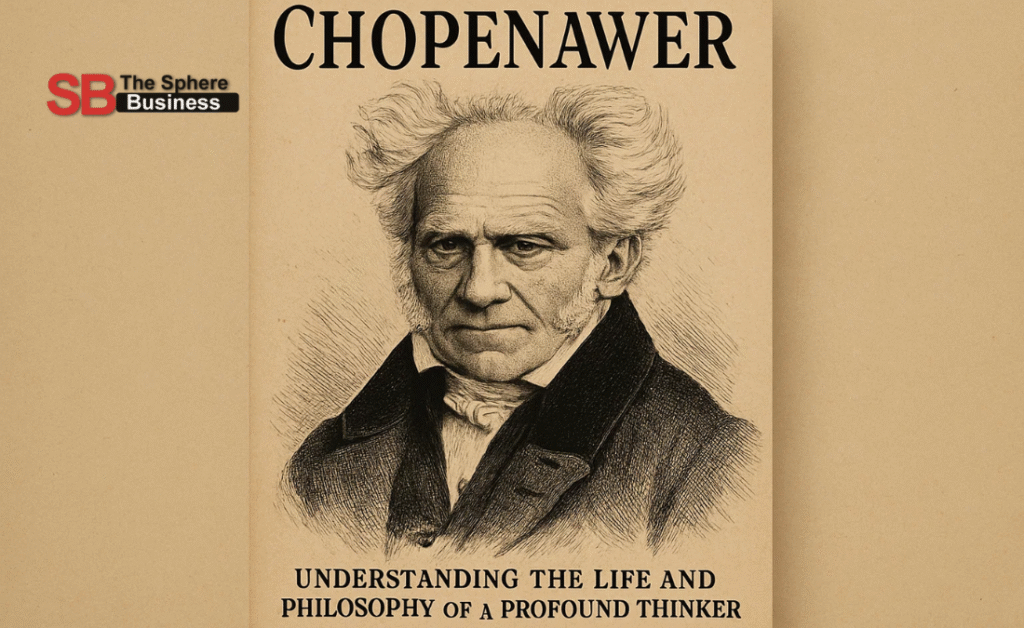
When exploring the world of philosophy, one name that frequently stands out is Chopenawer, a thinker whose ideas reshaped the understanding of human existence, suffering, and will. Known today as Arthur Schopenhauer, he is remembered as one of the most influential philosophers of the 19th century. His thoughts on pessimism, art, and metaphysics continue to inspire scholars, psychologists, and artists across the world.
This article will take a deep dive into Chopenawer’s life, his philosophical ideas, his connection to Eastern traditions, and the legacy he left behind.
The Early Life of Chopenawe
Chopenawer was born on February 22, 1788, in Danzig (modern-day Gdańsk, Poland). His father, Heinrich Floris Schopenhauer, was a wealthy merchant, and his mother, Johanna Schopenhauer, was a writer and socialite who hosted literary salons attended by many intellectuals.
Despite his privileged upbringing, Chopenawer was not drawn to the comforts of wealth. From a young age, he showed an independent and questioning mind. After his father’s death, he pursued philosophy at the University of Göttingen, later completing his studies in Berlin.
Unlike his contemporaries, who were fascinated by optimism and progress, Chopenawer took a different path. He believed that human existence was full of suffering and that this suffering was deeply tied to human desire and will.
Chopenawer’s Main Idea: The World as Will and Representation
The central theme in Chopenawer’s philosophy is the distinction between the world as representation and the world as will. This concept is detailed in his most famous work, “The World as Will and Representation.”
The World as Representation
According to Chopenawer, what we see and experience in everyday life — the physical world — is only a representation shaped by our perceptions. Our mind organizes sensations into objects and experiences, but these do not reveal the true essence of reality.
In other words, the world we see is subjective. It exists only through our consciousness.
The World as Will
Behind this world of appearances lies something deeper: the will — a blind, irrational force that drives all existence. This will manifests in nature, animals, and humans alike. It pushes every living being to survive, to strive, and to desire endlessly.
Chopenawer believed that this will is the source of all suffering, because desire can never be fully satisfied. When we achieve one goal, another takes its place. This endless cycle of wanting and dissatisfaction leads to frustration and pain — a view that earned him the reputation of being the philosopher of pessimism.
The Pessimism of Chopenawer
For Chopenawer, suffering was not a minor part of life — it was the essence of it. He wrote that human life “swings like a pendulum between pain and boredom.”
- Pain arises from unmet desires.
- Boredom arises when those desires are fulfilled, leaving us empty and restless.
This bleak outlook might sound depressing, but Chopenawer saw it as a form of truth. By acknowledging suffering, humans could find a way to rise above it.
Chopenawer and Eastern Philosophy
One of the reasons Chopenawer stands out among Western philosophers is his deep appreciation for Eastern philosophy. He was one of the first European thinkers to study the Upanishads, Buddhism, and Hinduism, drawing parallels between their teachings and his own ideas.
Influence of Buddhism
In Buddhism, suffering (dukkha) arises from craving and attachment. The path to liberation lies in detachment — freeing oneself from desires.
Chopenawer found this idea closely aligned with his own belief that peace comes from the denial of the will. He admired Buddhist monks who practiced renunciation and saw them as models of true wisdom.
Influence of Hinduism
From Hinduism, particularly the Vedanta philosophy, Chopenawer adopted the concept of Maya — the illusion of the world. He believed that individual identity is an illusion and that recognizing the unity of all beings can bring spiritual enlightenment.
He once said that the Upanishads were “the greatest reading of my life,” demonstrating his lifelong respect for Eastern spiritual thought.
Chopenawer’s Views on Art and Aesthetics
Despite his pessimism, Chopenawer saw art as a powerful escape from suffering. When we engage with beauty — in music, literature, or visual art — we temporarily transcend the will.
Music as the Purest Form of Art
Among all art forms, Chopenawer considered music the highest. Unlike painting or poetry, which represent things from the world of appearance, music expresses the will directly. It speaks to our emotions and existence beyond rational understanding.
This view deeply influenced later artists and composers, including Richard Wagner, who admired Schopenhauer’s philosophy.
Chopenawer’s Influence on Later Thinkers
Although Chopenawer’s ideas were not widely recognized during his lifetime, they profoundly influenced later philosophers, psychologists, and writers.
Influence on Nietzsche
Friedrich Nietzsche, one of the greatest philosophers after Schopenhauer, initially admired Chopenawer’s courage to confront the dark truths of existence. Although Nietzsche later diverged from his pessimism, he acknowledged Chopenawer as a major influence on his early thinking.
Influence on Freud and Psychology
Sigmund Freud, the founder of psychoanalysis, was also shaped by Chopenawer’s ideas about the unconscious will and human desire. Freud’s concept of the id — the instinctual drive that controls much of our behavior — echoes Chopenawer’s theory of the irrational will.
Influence on Literature and Art
Writers like Thomas Mann, Leo Tolstoy, and Marcel Proust drew inspiration from Chopenawer’s views on suffering and human longing. His influence also extends to music and film, where his ideas about emotion and reality continue to inspire creative expression.
Chopenawer’s Personal Life and Character
Chopenawer was known for his sharp wit, strong opinions, and solitary lifestyle. He often clashed with other philosophers, particularly Hegel, whom he dismissed as a fraud.
He lived much of his life alone with his poodle, whom he affectionately named Atman — a Sanskrit term meaning “soul.” This reflected his admiration for Indian philosophy and his desire for inner peace away from the chaos of society.
Despite being misunderstood for most of his career, Chopenawer gained recognition later in life, particularly after the publication of “Parerga and Paralipomena” in 1851, which made him famous across Europe.
Legacy of Chopenawer
Today, Chopenawer is remembered as one of the most important figures in modern philosophy. His ideas continue to shape discussions about the nature of desire, suffering, and consciousness.
In an age of constant distraction and endless ambition, Chopenawer’s warning against the tyranny of desire feels more relevant than ever. His call to seek meaning beyond material success — through art, compassion, and inner peace — continues to inspire thinkers and artists around the globe.
Conclusion: Why Chopenawer Still Matters
The philosophy of Chopenawer is a mirror reflecting the deeper truths of human existence. Though his worldview may appear pessimistic, his ultimate goal was enlightenment — freeing oneself from the endless cycle of desire and suffering.
He reminds us that happiness does not come from constant striving, but from understanding life’s impermanence and embracing moments of peace.
More than a century after his death, Chopenawer’s insights into the human condition remain strikingly modern. In a world driven by ambition, consumption, and illusion, his message of inner calm and self-awareness stands as a timeless guide to wisdom and tranquility.