

The world of business has changed dramatically over the past few decades, with computing playing a central role in this transformation. The term “business computing world” refers to the vast and dynamic field where business operations intersect with technology, innovation, and digital tools. From cloud computing and artificial intelligence to big data analytics and enterprise resource planning systems, modern businesses rely heavily on computing to stay competitive, efficient, and customer-centric.
This article will provide a detailed exploration of the business computing world, discussing its history, current applications, major trends, challenges, and future opportunities.
What is Business Computing World?
The business computing world encompasses the use of computer systems, software, and networks to support and optimize business processes. This includes activities such as managing data, automating operations, enhancing communication, and providing insights for strategic decision-making.
In simpler terms, it’s the space where technology solutions meet business needs. Whether it’s a small business adopting cloud-based accounting software or a multinational corporation implementing machine learning for supply chain optimization, computing has become the backbone of business functions.
The Evolution of Business Computing World
The business computing world has a rich history that reflects the rapid development of technology:
- Early Stages (1950s–1970s): Businesses used large mainframe computers for payroll, accounting, and inventory tracking. Computing was expensive and limited to large organizations.
- The PC Revolution (1980s): The introduction of personal computers transformed the business computing world, making technology accessible to small and medium-sized enterprises.
- The Internet Era (1990s–2000s): The rise of the internet expanded global communication, e-commerce, and digital marketing, opening new opportunities for business computing.
- Cloud and Mobile Computing (2010s): Companies began migrating to cloud platforms, enabling flexible, scalable, and cost-effective computing solutions accessible from anywhere.
- Artificial Intelligence and Beyond (2020s): Today, AI, big data, machine learning, and blockchain are redefining the business computing world, empowering businesses to innovate and personalize experiences at scale.
Key Components of Business Computing World
To understand the business computing world, it is important to break down its key components:
1. Hardware and Infrastructure
Servers, data centers, and networking equipment form the backbone of the business computing environment. Cloud infrastructure now plays a dominant role, reducing the need for on-premise servers.
2. Software Applications
Enterprise software such as ERP (Enterprise Resource Planning), CRM (Customer Relationship Management), and productivity tools are crucial in managing operations efficiently.
3. Data Management
Data is at the heart of the business computing world. Companies rely on databases, data warehouses, and data lakes to store and analyze vast amounts of information.
4. Cybersecurity
With digitization comes risk. Protecting business data, networks, and systems from cyber threats is a major pillar of modern computing.
5. Cloud Services
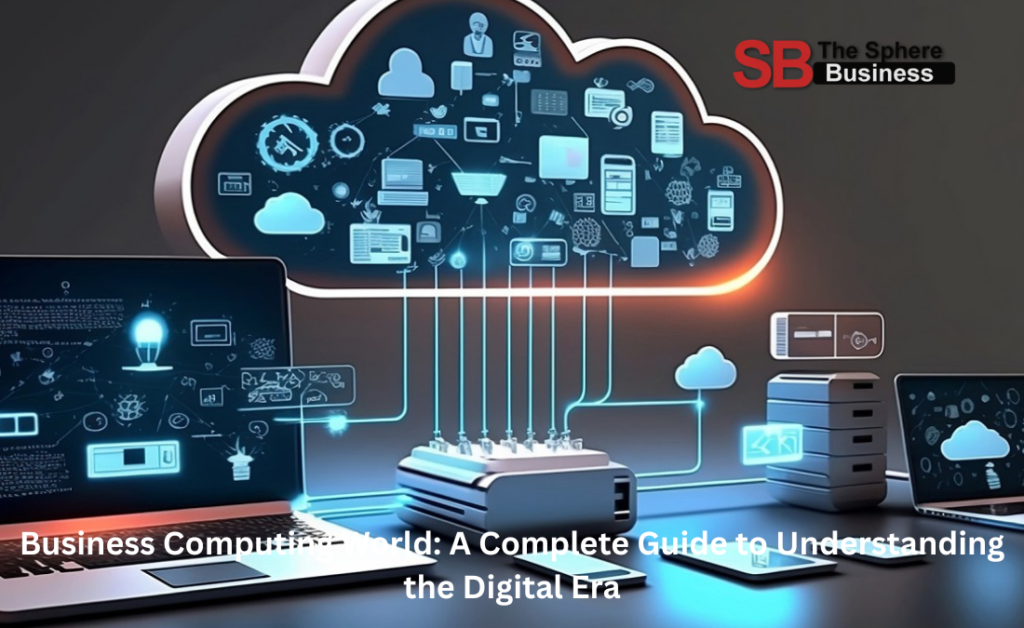
Cloud computing allows businesses to scale resources, collaborate globally, and innovate quickly without investing heavily in physical infrastructure.
Applications of Business Computing World
The business computing world finds applications across all sectors:
- Finance and Banking: Online banking, fraud detection systems, algorithmic trading, and blockchain innovations.
- Healthcare: Electronic health records, telemedicine, AI-assisted diagnostics, and medical research computing.
- Retail and E-commerce: Online marketplaces, personalized shopping experiences, and digital payment systems.
- Manufacturing: Automation, robotics, supply chain optimization, and predictive maintenance using IoT.
- Education: Online learning platforms, student management systems, and virtual classrooms.
- Entertainment: Streaming services, content recommendation algorithms, and digital media platforms.
The Importance of Business Computing World in Modern Times
The business computing world is not just a tool but a necessity in today’s competitive marketplace. Its importance can be summarized as follows:
- Efficiency and Productivity: Automation reduces manual errors and speeds up processes.
- Decision-Making: Data analytics enables evidence-based business decisions.
- Globalization: Computing enables companies to reach global markets seamlessly.
- Customer Engagement: Digital platforms improve communication and provide personalized experiences.
- Innovation: Emerging technologies like AI, IoT, and blockchain drive new business models.
Trends Shaping the Business Computing World
The business computing world is evolving rapidly. Here are the latest trends shaping its future:
- Artificial Intelligence and Machine Learning: Businesses are adopting AI for customer service (chatbots), predictive analytics, and personalization.
- Cloud-Native Computing: Cloud-first strategies are now the norm for enterprises.
- Big Data and Analytics: Companies are leveraging big data to understand customer behavior and market trends.
- Cybersecurity Focus: With increasing cyberattacks, businesses are prioritizing advanced cybersecurity solutions.
- Remote Work Technologies: Collaboration tools and virtual offices are redefining workplace computing.
- Blockchain Applications: Beyond cryptocurrency, blockchain is being used in supply chain, contracts, and identity management.
- Green Computing: Sustainable IT practices are gaining importance in the business computing world.
Challenges in Business Computing World
Despite its advantages, the business computing world faces several challenges:
- Data Privacy Concerns: Managing customer data responsibly is a critical issue.
- Cybersecurity Threats: Hackers are becoming more sophisticated, creating risks for businesses.
- Cost of Innovation: Keeping up with rapid technological changes can be expensive.
- Digital Divide: Smaller businesses may struggle to adopt cutting-edge technologies.
- Skill Gaps: There is a growing need for skilled professionals in AI, cybersecurity, and data science.
The Future of Business Computing World
The business computing world is set to expand further in the coming years. With advancements in quantum computing, edge computing, and AI integration, businesses will experience even greater efficiency and innovation. The future will also see stronger emphasis on cybersecurity, ethical AI, and sustainable technology.
Businesses that embrace these changes early will gain a significant competitive advantage.
Conclusion: The Power of Business Computing World
In conclusion, the business computing world represents the intersection of technology and business that drives modern economies. From its early days of mainframe computers to today’s AI-driven solutions, it has transformed how companies operate, communicate, and grow.
As technology continues to evolve, businesses must remain agile, adopting the latest innovations while addressing challenges like cybersecurity and data privacy. Ultimately, the business computing world is not just about computers and software—it is about empowering businesses to create value, serve customers better, and thrive in a rapidly changing digital landscape.