

Quick Info
When we talk about “toilet rough in,” we’re talking about one of the most important measurements in bathroom plumbing. It’s the distance between the finished wall and the center of the toilet’s drain pipe. This measurement decides what size toilet will actually fit in your bathroom. The most common rough-in sizes are 10 inches, 12 inches, and 14 inches, with 12 inches being the standard in most modern homes.
If we get this wrong, the toilet may not fit properly, which can lead to installation problems, wasted money, or even having to return the toilet. So understanding toilet rough in is a must before buying or installing a new toilet.
What Is Toilet Rough In?
To put it simply, toilet rough in is the measurement from the wall behind the toilet (not the baseboard, but the finished wall) to the center of the toilet’s floor drain or closet flange.
This measurement tells us how much space the toilet will need. It’s like checking shoe size before buying shoes. If the size is wrong, nothing will feel right.We usually measure it before choosing a toilet because toilets are designed to match specific rough-in sizes.
Why Toilet Rough In Matters
We might think all toilets are the same size, but that’s not true. Even a few inches can make a big difference in bathroom fitting.
Here’s why this measurement is so important:
- It ensures the toilet fits properly against the wall
- It avoids spacing issues in small bathrooms
- It helps prevent plumbing alignment problems
- It saves us from costly returns or replacements
- It makes installation smoother and faster
If the rough in doesn’t match the toilet, we might end up with gaps between the wall and tank or even a toilet that sticks too far into the room.
Standard Toilet Rough In Sizes
Most homes use one of three standard rough-in measurements.
10-Inch Rough In
This is usually found in older homes or smaller bathrooms. It’s less common today but still widely used in compact spaces.
- Best for tight bathrooms
- Often used in older construction
- Limited toilet options compared to 12-inch
12-Inch Rough In (Most Common)
This is the standard size in modern homes. Most toilets are designed for this measurement.
- Widest variety of toilet models
- Easiest to find replacement toilets
- Standard in new construction
14-Inch Rough In
This is less common but still used in some homes.
- Found in custom or older layouts
- Fewer toilet options available
- Sometimes used when plumbing was adjusted during renovations
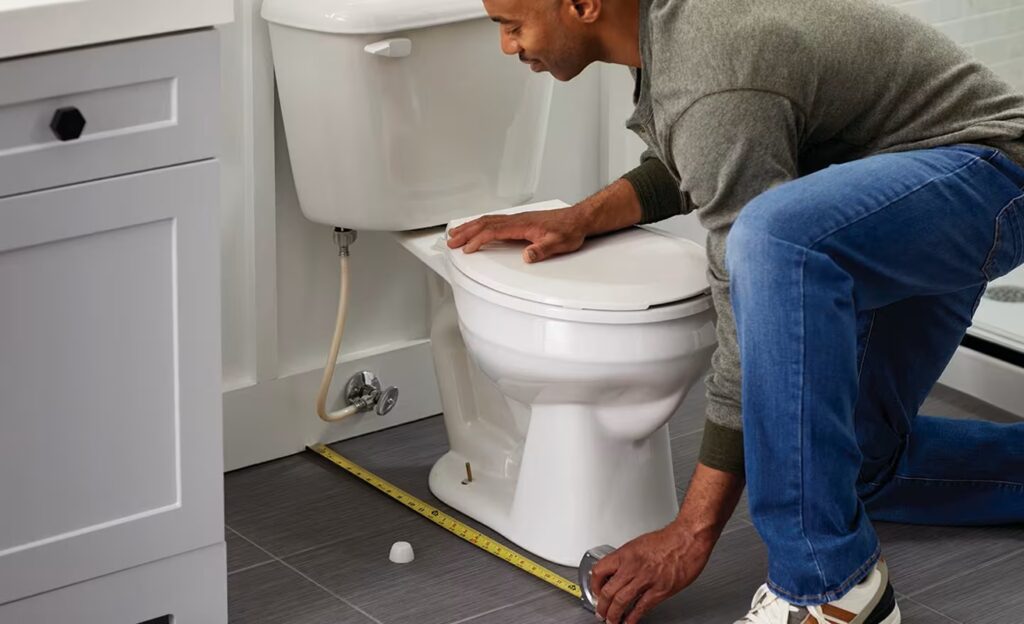
How to Measure Toilet Rough In
Measuring toilet rough in is not complicated, and we can do it ourselves in a few minutes.
Here’s how we do it:
- Find the finished wall behind the toilet (not the baseboard)
- Locate the closet bolts holding the toilet to the floor
- Measure from the wall straight to the center of one closet bolt
- That number is your rough in size
We always make sure to measure in a straight line. Even a small angle can give us the wrong result.
If there is already a toilet installed, we don’t measure to the back of the toilet. We always measure to the wall and bolt center.
Common Mistakes When Measuring Rough In
A lot of people make simple mistakes when measuring toilet rough in. We can avoid problems by being careful.
Here are the most common mistakes:
Measuring to the Baseboard Instead of the Wall
Baseboards add extra space, so measuring to them will give incorrect results. Always measure from the finished wall.
Not Measuring to the Center of the Bolt
Some people measure to the edge of the bolt instead of the center, which can throw off the measurement.
Assuming All Toilets Are 12 Inches
This is a big mistake. Not all bathrooms are standard, especially older homes.
Forgetting About Tile or Wall Finishes
If new flooring or tile is added later, it can slightly change the measurement.
What Happens If the Rough In Doesn’t Match?
If we buy a toilet with the wrong rough-in size, a few things can go wrong:
- The toilet may sit too far from the wall
- It may not fit in the available space
- The tank might touch or be too far from the wall
- Installation may not be possible at all
In some cases, we might need an offset flange or even plumbing changes, which can be expensive and time-consuming.
Adjustable and Alternative Solutions
If we’re stuck with a rough-in size that’s not standard, don’t worry. There are a few solutions.
Offset Flanges
An offset flange helps shift the toilet position slightly forward or backward to match space requirements.
Compact Toilets
Some toilets are specially designed for small spaces and may fit better even in non-standard rough-ins.
Wall-Mounted Toilets
These toilets don’t rely on traditional floor rough-in measurements, but they require special wall support systems.
Toilet Rough In During Renovation
When we’re remodeling a bathroom, rough in becomes even more important.
If we are changing flooring, walls, or plumbing, we should:
- Recheck rough in after demolition
- Confirm final wall position before installing toilet
- Coordinate with plumber before choosing fixtures
Many renovation mistakes happen because rough in was not rechecked after construction changes.
Choosing the Right Toilet Based on Rough In
Once we know the rough in size, choosing the toilet becomes much easier.
For 12-inch rough in:
- Almost all modern toilets will fit
- We get more design and flushing options
- Easier installation process
For 10-inch rough in:
- We need compact models
- Fewer styles available
- Must double-check specifications before buying
For 14-inch rough in:
- We should look for labeled 14-inch models
- Some brands offer adaptable designs
- Availability may be limited
Installation Basics Related to Rough In
When installing a toilet, rough in is just the starting point. Here’s how it connects to installation:
- The closet flange must align with the rough in
- Wax ring seals depend on proper alignment
- Toilet bolts must match flange position
- Tank must sit close to wall without pressure
Even a perfectly chosen toilet can fail if installation ignores rough in alignment.
Signs Your Rough In Was Miscalculated
Sometimes we don’t realize there’s a problem until we start installing. Here are warning signs:
- Toilet doesn’t sit close to the wall
- Toilet base doesn’t align with bolts
- Tank feels too far or too close to wall
- Installation feels forced or uneven
If we see these signs, it’s better to stop and recheck measurements.
Tips to Make Everything Easier
We can avoid most rough in problems by following a few simple tips:
- Always measure twice before buying
- Check product specs before ordering a toilet
- Don’t rely on old measurements if remodeling
- Ask a plumber if unsure
- Take photos of the bathroom layout before shopping
Small preparation saves us from big installation headaches later.
Final Thoughts
Toilet rough in might sound like a small technical detail, but it actually decides whether a toilet fits perfectly or not. It’s one of those things we don’t think about until we face installation issues.
Once we understand how to measure it, what sizes exist, and how it affects toilet selection, everything becomes much easier. Whether we’re building a new bathroom or replacing an old toilet, getting the rough in right is the first and most important step.
With a simple tape measure and a little attention to detail, we can avoid costly mistakes and make sure our bathroom setup works smoothly and comfortably.