

For aspiring leaders in the UK, the Master of Business Administration (MBA) is often seen as a fast-track to strategic roles and executive decision-making. Yet, as the academic journey culminates, many question the real-world applicability of their extensive theoretical knowledge. This is precisely where the MBA dissertation transcends its role as a mere academic requirement, transforming into a potent tool for bridging the chasm between classroom theory and the intricate demands of industry leadership.
In the highly competitive UK business landscape, employers seek candidates who can not only articulate complex business concepts but also demonstrate the ability to apply them to solve tangible problems, drive innovation, and lead change. A well-executed MBA dissertation provides a unique platform to prove precisely these capabilities.
Beyond the Literature Review: The UK Context
While a robust literature review is the bedrock of any strong dissertation, UK MBA programmes often place a significant emphasis on applied research. This means moving beyond simply synthesising existing knowledge and instead contributing original insights, analysing real-world data, or developing practical frameworks relevant to specific industries or challenges within the British economy.
Consider, for instance, the rapid digital transformation impacting UK SMEs, the evolving regulatory landscape post-Brexit, or the push for sustainability in British manufacturing. An MBA dissertation that tackles such pertinent issues with rigour and an evidence-based approach offers immediate value. It shows future employers that you possess:
- Problem-Solving Acumen: The ability to identify a complex business challenge and dissect it systematically.
- Analytical Prowess: Proficiency in gathering, analysing, and interpreting data to draw meaningful conclusions.
- Strategic Thinking: The capacity to connect theoretical models with practical implementation strategies.
- Sector-Specific Knowledge: A deep dive into a particular industry, making you an instant asset.
Cultivating the Attributes of a Future Leader Through Dissertation Work
The process of undertaking an MBA dissertation is, in itself, a comprehensive leadership training exercise. It forces students to develop and hone several critical attributes that are indispensable in senior management roles.
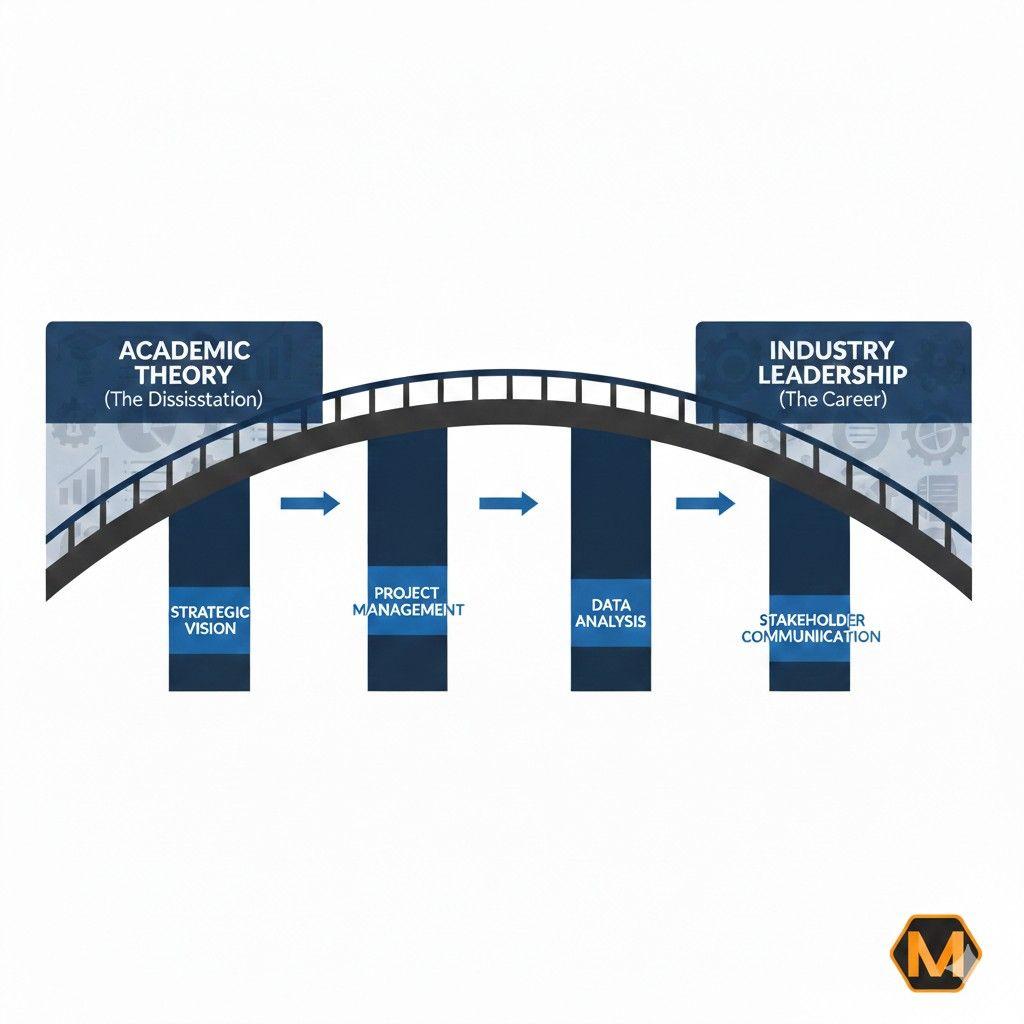
1. Strategic Vision and Foresight
Choosing a dissertation topic is perhaps the first leadership decision you make. It requires strategic foresight – identifying an area of business that is not only personally interesting but also holds significant relevance for future industry trends or organisational needs. This could involve exploring emerging markets, the impact of AI on customer behaviour in the UK retail sector, or new models of sustainable supply chain management. The selection process itself trains you to think about long-term impact and potential disruption.
2. Project Management Expertise
A dissertation is, fundamentally, a complex project. From defining scope and setting realistic timelines to managing resources (including your own time and potentially that of others for data collection) and mitigating risks, the entire process mirrors the challenges of leading a strategic initiative within a corporation. Successful completion demonstrates an ability to execute large-scale projects effectively – a core competency for any leader.
3. Data-Driven Decision Making
In today’s data-rich environment, leaders are expected to make informed decisions backed by evidence, not just intuition. The MBA dissertation immerses you in the world of primary and/or secondary data. Whether you’re conducting interviews with industry leaders, surveying consumers, or analysing financial reports of FTSE 100 companies, you learn to:
- Formulate precise research questions.
- Select appropriate methodologies (quantitative, qualitative, mixed methods).
- Utilise analytical tools (e.g., SPSS, NVivo, Excel for modelling).
- Critically evaluate findings and their implications.
While mastering tools like SPSS or NVivo is essential for a leadership-grade dissertation, the learning curve can be steep. Professional dissertation mentoring can help bridge this technical gap, allowing you to focus on the strategic insights rather than the software hurdles
4. Communication and Persuasion
Presenting your findings clearly, concisely, and persuasively is as crucial as the research itself. The dissertation requires you to articulate complex arguments, defend your methodology, and convey the significance of your results in a way that resonates with both academic and professional audiences. This refines your ability to communicate vision, strategy, and outcomes to stakeholders – a hallmark of effective leadership.
Furthermore, if you engage with industry professionals for your research, you are honing your networking and stakeholder management skills – learning to build rapport, ask insightful questions, and extract valuable information, all while representing your academic institution professionally.
Bridging the Gap: Practical Applications of Dissertation Findings
The true power of an MBA dissertation to bridge theory and leadership lies in its potential for real-world application.
Case Study Development: Your dissertation can become a comprehensive case study, offering invaluable insights into a specific company, industry challenge, or market dynamic within the UK. This can be directly useful for consulting roles or for internal strategic planning.
Policy Influence: Research into areas like corporate governance, ethical leadership, or sustainable business practices could inform policy discussions, either within a specific organisation or even at a broader industry level.
Product/Service Innovation: If your dissertation explores market needs, customer preferences, or technological advancements, its findings could directly lead to the development of new products, services, or business models.
Process Optimisation: Research into operational efficiencies, supply chain resilience, or organisational behaviour can provide clear recommendations for improving existing business processes, reducing costs, or enhancing employee engagement.
The jump from structured modules to independent research is often where the ‘support gap’ becomes most apparent. While university supervisors provide high-level guidance, many students require more granular dissertation help to navigate complex primary data collection or to master specific software like SPSS and NVivo. Addressing these technical hurdles early ensures that the final submission remains focused on original contribution rather than basic formatting errors.
Leveraging Your Dissertation in Your Career Path
Once completed, your MBA dissertation should not merely sit on a shelf. It is a powerful asset to be leveraged in your job search and subsequent leadership journey.
- Interview Gold: Your dissertation provides a concrete example of your analytical, problem-solving, and project management skills. Be prepared to discuss your topic in depth, the challenges you faced, and the key insights you gained. It demonstrates initiative and a genuine interest in contributing to the business world.
- Thought Leadership: Consider adapting sections of your dissertation into articles for industry publications, blog posts, or conference presentations. This establishes you as a thought leader in your chosen field, enhancing your professional brand and visibility within the UK business community.
- Consulting Engagements: The in-depth knowledge and unique insights derived from your research can be the foundation for future consulting opportunities, allowing you to apply your findings directly to help businesses.
- Networking: Your dissertation often involves engaging with industry professionals. These connections, nurtured throughout your research, can evolve into valuable professional relationships and mentorship opportunities, opening doors to leadership roles.
For those undertaking an Executive MBA or focusing on specific career transitions, detailed guidance from MBA dissertation writing services can be particularly beneficial. These services can help refine your research question to align with specific career aspirations, ensure your methodology is robust, and articulate your findings in a way that resonates with industry leaders. They assist in translating complex academic work into actionable business insights, ensuring your dissertation effectively positions you for the leadership role you envision.
The Lasting Impact
In conclusion, an MBA dissertation is far more than a final academic hurdle. It is a crucible in which future leaders are forged, demanding intellectual rigour, strategic thinking, and practical application. By immersing yourself in a real-world business challenge, contributing original insights, and articulating your findings with clarity, you not only fulfil an academic requirement but also develop the essential attributes, demonstrate the capabilities, and build the credibility necessary to transition seamlessly from theoretical understanding to impactful industry leadership within the UK and beyond. The insights and skills gained will serve as a foundational pillar throughout your entire professional career, empowering
About The Author
Theodore is a Senior Academic Consultant at The Sphere Business, specialising in UK MBA leadership development. With over a decade of experience in bridging the gap between postgraduate research and executive roles, he provides the strategic oversight and data-driven guidance necessary for students to turn their dissertations into career-launching assets.