


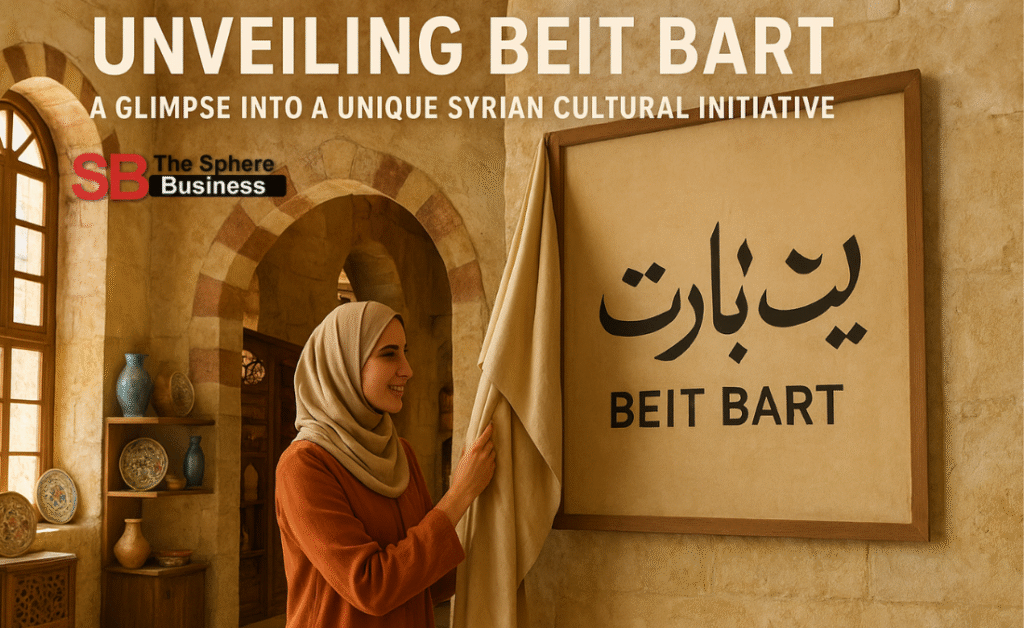
In the vast and intricate tapestry of global culture, certain names and places resonate with immediate recognition, while others remain hidden gems, known only to those within specific communities or regions. The term “Beit Bart” falls into the latter category—a phrase that might not register on a global scale but holds profound significance within its local context. For the uninitiated, “Beit Bart” (بيت بارت) translates from Arabic to “The House of Bart,” suggesting a place of gathering, creation, or preservation. This article delves into the identity and cultural importance of Beit Bart, exploring its role as a unique initiative in Syria dedicated to art, heritage, and community resilience.
The Historical and Cultural Context of Beit Bart
To understand Beit Bart, one must first appreciate its setting. Syria, a country with an ancient and rich history, has been a crossroads of civilizations for millennia. From the Umayyad Caliphate to the Ottoman Empire, its soil is layered with stories, art, and traditions. However, the recent decades of conflict have posed an existential threat to this cultural wealth, damaging historical sites and displacing communities.
It is within this challenging environment that initiatives like Beit Bart emerge as beacons of hope. Typically, a “Beit” (house) in Arab culture is more than just a physical structure; it is a concept denoting a center for family, learning, and hospitality. When combined with a name like “Bart,” it often signifies a specific foundation or a family’s legacy dedicated to a cause. Beit Bart, therefore, is not merely a building; it is an institution. Its mission is often rooted in the preservation of Syrian cultural identity—documenting oral histories, safeguarding traditional crafts, and providing a safe haven for artists and intellectuals to create and collaborate away from the turmoil of conflict. It represents a conscious effort to protect the soul of a nation when its physical body is under duress.
The Multifaceted Mission of Beit Bart: Art, Education, and Community
The core activities of Beit Bart are typically multifaceted, addressing the immediate needs of its community while investing in a long-term cultural vision. Its work can generally be broken down into several key areas:
1. A Sanctuary for Artists and Artisans: In times of war, art is often dismissed as a luxury. However, initiatives like Beit Bart argue that it is a necessity—a vital form of expression, therapy, and resistance. Beit Bart often functions as a studio and exhibition space for painters, sculptors, and photographers. More importantly, it provides a platform for traditional artisans—weavers, woodworkers, glassblowers—whose crafts are at risk of being lost forever. By offering workspace, materials, and a market for their goods, Beit Bart helps keep these ancient skills alive, ensuring they can be passed on to future generations.
2. An Educational Hub: Preservation is futile without transmission. Beit Bart frequently serves as an informal school, offering workshops and classes for children and adults. These might include lessons in traditional music, calligraphy, pottery, or even language classes. For young people whose education has been disrupted, these programs offer not just skills but also a sense of normalcy, structure, and pride in their heritage. It is an education in identity, teaching them about the depth and beauty of their culture beyond the headlines of destruction.
3. An Archive of Memory: Perhaps one of the most critical roles of an institution like Beit Bart is that of an archivist. Teams associated with such centers often work to document everything from folk songs and recipes to personal testimonies and stories from elderly community members. This act of recording is an act of defiance against erasure. It ensures that the intangible cultural heritage—the memories that make a people who they are—is not lost to the passage of time or the violence of war.
The Symbolism of Beit Bart: Resilience and Hope
Beyond its tangible outputs, the existence of Beit Bart is powerfully symbolic. In a landscape scarred by conflict, the simple act of creating beauty, of singing a song, or of teaching a child to paint becomes a profound political and humanistic statement. It is a declaration that life, and all that makes it meaningful, continues.
Beit Bart stands as a testament to the indomitable nature of the human spirit. It symbolizes a community’s refusal to be defined solely by its suffering. Instead, it chooses to be defined by its creativity, its resilience, and its unwavering commitment to its history. This “house” is built not with bricks of despair, but with the mortar of hope, collaboration, and an unshakeable belief in a future where culture is not a casualty of war but a foundation for peace and reconciliation. It embodies the idea that while conflicts can destroy buildings, they cannot destroy a culture as long as there are people dedicated to nurturing its flame.
Conclusion
In conclusion, “Beit Bart” is far more than a simple keyword or a literal translation of “The House of Bart.” It is a concept, a movement, and a vital cultural initiative rooted in the heart of Syria. While its specific programs may vary, its overarching purpose is clear: to serve as a fortress for culture in a time of great adversity. Through its work in supporting artists, educating the youth, and archiving precious memories, Beit Bart actively fights against cultural amnesia and despair. It reminds us that in the darkest of times, humanity’s greatest response is often to create, to remember, and to build communities around shared heritage. The story of Beit Bart is ultimately a story of resilience—a powerful reminder that culture is not a passive victim of history but an active force in shaping a more hopeful and beautiful future.